 ) located in the address bar to open the share menu.
Active, Strong and Independent after 50
Save this item - "Active, Strong and Independent after 50"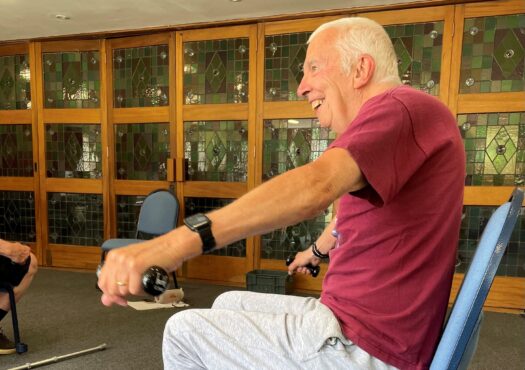
As we get older, strength and balance exercises can help us maintain our independence, improve confidence and keep us doing the things we enjoy for longer.
As we age, we naturally begin to lose muscle strength and balance. Research and national physical activity guidance tell us that regular strength and balance activities can help older adults:
- Improve muscle strength and mobility
- Increase confidence when moving around
- Support healthy joints and bones
- Make everyday tasks easier
- Remain independent for longer
- Improve mental wellbeing
- Stay socially connected
Whether you’re looking to keep up with the grandchildren, enjoy longer walks, continue gardening or simply feel steadier on your feet, adding strength and balance activities to your weekly routine can make a real difference to your daily life.
Strength and balance exercises aren’t about lifting heavy weights or spending hours in a gym. It’s about adding some simple exercises to your daily routine so you can continue to carry out everyday tasks such as getting up from a chair, carrying shopping bags, climbing stairs, gardening, housework, getting in and out of a car.
Some exercises to try at home:
The following exercises are commonly recommended to improve stability and mobility. If you’re unsure about exercising with an existing health condition, please speak to a healthcare professional first.
Before you start:
- Have a sturdy chair (with no wheels), wall or worktop nearby for support.
- Start slowly.
- Aim for a little movement every day.
- Build up gradually.
Exercise 1: Heel Raises – helps strengthen your calves and improve balance.
| Seated Heel Raises | Standing Heel Raises |
| 1. Sit tall in a sturdy chair with feet flat on the ground.
2. Slowly rise onto your tiptoes. 3. Hold for a few seconds. 4. Slowly lower back down. 5. Repeat 10 times. |
1. Stand tall holding the back of a chair.
2. Slowly rise onto your tiptoes. 3. Hold for a few seconds. 4. Slowly lower back down. 5. Repeat 10 times. |
Exercise 2: Weight Shifts – helps improve balance and stability.
| Seated Weight Shifts | Standing Weight Shifts |
| 1. Sit on a chair with your feet on ground hip-width apart.
2. Slowly lift one foot. 3. Hold for a few seconds. 4. Return foot to the ground. 5. Repeat on the other side. |
1. Stand with your feet hip-width apart.
2. Slowly shift your weight and lift one foot. 3. Hold for a few seconds. 4. Return foot to the ground. 5. Repeat on the other side. |
Exercise 3: Heel-to-Toe Walk – helps improve coordination and balance.
| Heel to Toe Walk |
| 1. Stand near a wall or worktop (use for balance if needed).
2. Place one foot directly in front of the other (so the heel of the front foot is directly in front of the other foot). 3. Walk forward slowly, placing one foot directly in front of the other, one step at a time. 4. Focus on a fixed point ahead. |
Exercise 4: Sit-to-Stand – helps strengthen the muscles used when getting up from chairs, toilets and beds.
| Sit to Stand |
| 1. Sit on a sturdy chair (with no wheels).
2. Place your feet flat on the floor. 3. Stand up using your legs. 4. Slowly sit back down. 5. Repeat 5-10 times. |
Exercise 5: Chair Squats – helps strengthen legs and improves functional movement.
| Chair Squats |
| 1. Stand in front of a sturdy chair.
2. Slowly lower yourself towards the chair. 3. Pause just before sitting down. 4. Return to standing. 5. Repeat 5-10 times. |
Exercise 6: Step-Ups – helps improve leg strength and balance.
| Steps Ups |
| 1. Use a low step.
2. Step up with the right foot. 3. Bring the left foot up. 4. Step back down carefully with right foot. 5. Step back down carefully with the left foot. 6. Repeat several times before changing and leading with the left foot. |
Exercise 7: Resistance Band Arm Raises – helps build upper-body strength.
Resistance band exercises are regularly used in community strength and balance programmes because they are effective, adaptable and suitable for a range of abilities.
| Resistance Band Arm Raises |
| 1. Sit tall on a sturdy chair.
2. Hold a resistance band stretched out across your lap between both hands. 3. Raise your arms slowly. 4. Lower with control. 5. Repeat 8-12 times. |
Group Activities for Strength and Balance
Group activities can be a great way to build strength and balance while enjoying the benefits of being active with others. Joining a local class, club or community group can help you meet new friends, feel more connected and stay motivated. For many people, the social side of being active is just as important as the physical benefits, helping to reduce isolation and create a sense of belonging in the local community.
The following group activities have been shown to improve muscle strength, balance, physical function and social connection:
- Strength and balance classes
- Tai Chi or Yoga
- Walking football
- Dance classes
- Resistance band workouts
- Circuit training
- Walking Groups
Find Group Activities Near You
Visit Everyday Active Community Pages to discover activities, groups and classes happening in your local community that can help you stay active, strong and independent for longer.
Explore more

Local Communities
Everyday Active has champions in 12 locations across the county, who are working with local organisations and people to increase activity levels. Take a look at the local pages here.
Group exercise
Joining an exercise group or class can be a brilliant way to meet new people and get active at the same time. There are lots of different types of activities...
Read more about "Group exercise"Save this item - "Group exercise"
Benefits of…group exercise
Taking a group exercise class or joining a club and working out with your peers can be a great way to socially interact and stay on track to achieve your...
Read article about "Benefits of…group exercise"Save this item - "Benefits of…group exercise"
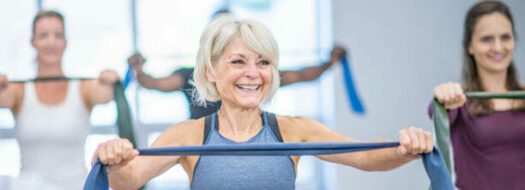
Benefits of…resistance band exercises
Using resistance bands whilst exercising can be a great way to help improve your strength and flexibility, muscle stability and coordination. A versatile piece of equipment that can be added...
Read article about "Benefits of…resistance band exercises"Save this item - "Benefits of…resistance band exercises"
Are you sitting too much?
Most of us know that being active is good for our health. But more evidence is emerging that even if you exercise regularly, spending a lot of time sitting down...
Read article about "Are you sitting too much?"Save this item - "Are you sitting too much?"
